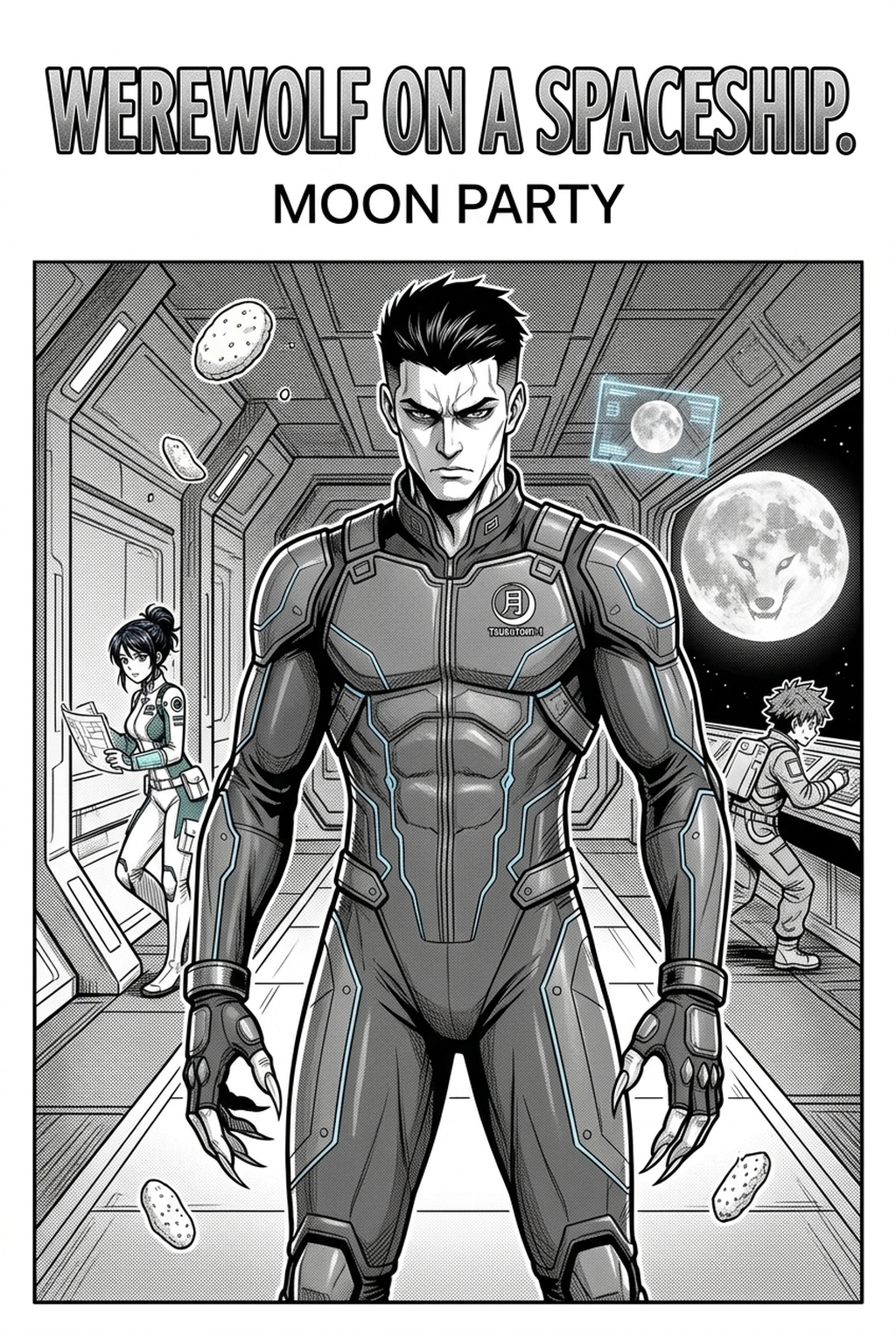
AI Manga Colorist: What to Look for in AI Manga Colorist Tools for Horror
The Anime News Network feature on how manga is made describes manga as staged work from rough draft to finished page. That production context matters for Horror creators because AI assistance is useful only when the sketch, inking pass, and final page review stay connected.
AI Manga Colorist for Horror manga helps creators choose the right Mangaka workflow for cleaner pages, steadier style, and review-ready output. The comparison starts with production speed, manual control, line quality, and export readiness because those factors shape whether a page can move into final review. When you are hunting for the right tool, you must look beyond standard color-fill features. Your primary goal is to enhance the atmosphere of your panels without sacrificing the intensity of your monochromatic foundation.
Creative Goals and Style Context
Horror thrives on stark, high-contrast imagery. If a tool treats your shadows like noise, it will ruin your composition. You need a colorist that understands how to separate your line art from your tonal shading, ensuring that the blood-red accents or sickly greens you add remain distinct. Your chosen tool should allow you to experiment with color theory—like using cold, desaturated tones to emphasize isolation—without forcing you to redo your base drawings.
Quality Checks Before Export
** You must verify that the AI hasn't introduced artifacts into your fine lines. Check your edge definition; horror manga often relies on thin, chaotic cross-hatching or thick, bold ink splatters that set the tone for a scene. If the color application bleeds into these areas, the "scare factor" of your art will dissipate.
Always review your high-contrast sections at 100% zoom to ensure that the blacks remain pitch black and the color sits intentionally behind your linework. Authority checks. - Reader expectations. MyAnimeList manga news keeps genre expectations visible for readers who scan action, character acting, and page rhythm quickly. Shonen inking should therefore preserve panel clarity, not just produce cleaner lines.
How We Evaluated These Tools
We assessed these platforms by testing them against real horror-genre constraints, specifically looking at how they handle deep-black ink and high-density panels. Our evaluation focused on the balance between automated efficiency and the manual control necessary for stylistic horror storytelling.
Line Weight and Panel Readability
We prioritized tools that allow you to maintain your unique visual language. A tool is only useful if it learns your style rather than imposing a generic "bright" look onto your pages. We evaluated whether these platforms allow for granular adjustments, as horror often requires subtle, uneven lighting—like flickering candles or dim, decaying basement interiors—which demand more than just a simple "autofill" setting.
Score Panel Readability at Final Size
Our evaluation included checking for line-art preservation and file-size stability. In the horror genre, the "negative space" is just as important as the drawn objects. We checked whether these tools correctly interpret silhouettes and negative space or if they incorrectly attempt to "color in" areas that are meant to be pure darkness.
Review the Top Tools Before Choosing
Creators need the page problem and review standard in view before choosing a workflow. For manga production, that means checking sketch cleanup, character consistency, panel readability, and export quality together.
Character Consistency Through Review
Mangaka stands out because it is built specifically to retain the integrity of your original ink work. Instead of treating your page as a flat image, it recognizes the relationship between your high-contrast lines and the space they occupy. This addresses the common pain point of AI tools blurring or "muddying" your cross-hatching or heavy shadow pools. By using AI Manga Colorist for Horror manga with Mangaka , you can achieve a professional, finished look that keeps your horror art feeling sharp, gritty, and intentional.
Export Quality Before Publishing
General-purpose AI generators are excellent for brainstorming concepts or creating backgrounds, but they often struggle with the sequential consistency required for a full horror manga chapter. They tend to prioritize vibrant, saturated palettes that can undermine the grounded, terrifying atmosphere of a horror story. While they can produce striking images, they often fail the "quality check" for ink preservation, frequently smoothing out lines until they appear soft or synthetic.
Character Consistency Through Review for Top Tools Reviewed
Professional software like Clip Studio Paint or Photoshop provides the ultimate control, but they are time-intensive. For an artist working on a weekly or monthly horror series, the manual task of flatting and coloring every page can lead to significant burnout. These apps are essential for final tweaks, but they shouldn't be your only line of defense against a looming deadline.
Export Quality Before Publishing for Top Tools Reviewed
Tools focused on paneling and layout are vital for pacing, but they rarely offer high-end colorist features. They are best used to structure your scares—managing the timing of a reveal or the claustrophobia of a tight panel—but they don't provide the color depth needed to bring those panels to life. You will likely need to pair these with a specialized colorist to get the desired aesthetic.
Line Weight and Panel Readability for Top Tools Reviewed
Manual workflows rely on your talent and time alone. While this yields the most consistent artistic result, it is the least scalable option. If you are an independent creator, this approach can lead to long gaps between releases, which may lose you your audience. Modern horror creators are increasingly using AI to handle the heavy lifting, allowing them to focus their energy on the creative layouts and emotional resonance of the story.
Compare Options Side by Side Before Choosing
| Feature | Mangaka | General AI Generators | Manual Production |
|---|---|---|---|
| Linework Integrity | Excellent (Preserved) | Poor (Often Blurry) | Perfect (Hand-drawn) |
| Horror Palette | Tailored/Moody | High Saturation | Fully Customizable |
| Efficiency | High | Medium | Low |
| Learning Curve | Low | Medium | High |
Creative Decisions and Export Quality
Mangaka is specifically designed for those who have already mastered their inking style and need to add color without sacrificing the "teeth" of their art. Other tools, like general-purpose generators, often require you to change your art style to match the AI’s capabilities, which is a major compromise for any creator with a distinct horror look.
Workflow Fit and Review Needs
When reviewing your files, you will notice that Mangaka respects your shadow density. Other software often attempts to interpret these dark areas as shapes to be colored, which can ruin the "dread" created by a dark, empty corner. Consistent quality is paramount, and Mangaka’s ability to treat your lines as a fixed layer prevents the typical AI-washed" look found in less specialized tools.
Which Tool Should You Choose?
Selecting the right tool depends on your current production bottleneck. If you are struggling to keep up with color demands while maintaining the high-contrast aesthetic that makes your horror manga successful, specialized tools are your best bet.
Reader Impact Before Publishing
Choose the tool that fits into your existing routine rather than forcing your routine to change. If your page need is high-volume production, you need a tool that handles the bulk of the color work while allowing you to step in for "hero" panels. AI Manga Colorist for Horror manga acts as an extension of your own hand, accelerating your output while ensuring the visual style remains dark, gritty, and cohesive.
Creative Decisions and Export Quality for Which Tool Should You Choose
Always prioritize the resolution of your lines during the review process. Even the most atmospheric color will fail to land if the linework becomes pixelated or blurred by aggressive AI processing. Select a tool that allows for high-resolution output and maintains a strict separation between your line layer and your color layer, ensuring you can still edit the colors manually after the AI has generated the base tones.
Release cadence belongs in the production context for manga tools. For creators, the useful product question is whether pages stay readable when schedule pressure rises. Export quality depends on whether the creator can still adjust cleanup, line weight, and handoff settings after AI assistance. Wacom comic and manga creation guidance ties that point to drawing practice instead of broad AI-image claims.
- Drawing practice. Wacom's comic and manga creation guide ties tool choice to brush control, cleanup effort, and export readiness. That keeps review grounded in creator workflow.
The Bottom Line
A useful coloring pass keeps the story goal, visual style, and review step clear before export. AI Manga Colorist gives creators a faster first pass without removing the final human review.
Start creating with AI Manga Colorist for Horror manga when you are ready to turn the reviewed idea into finished manga pages. Test it with one real page goal, one reference boundary, and one export requirement so the decision stays tied to production quality.
Discussion